

Institutional description
The ELTE Centre for Social Sciences is a research institution where 200 researchers engage in exploratory and innovative national and international research projects in the social sciences. The Centre’s aims to take a regional lead in social science, and serve as a national scientific reference point. It currently runs over 70 local and international projects. In the Institute for Minority Studies, the Social Anthropology and Sociology Department conducts research on minority education, educational mobility, transnational migration, nationalism and ethnic minorities.
Website
Researchers
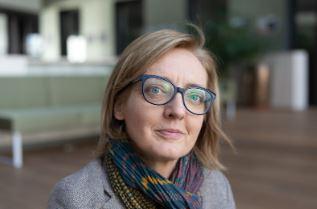
Zsuzsanna ÁRENDÁS, PhD, is a Senior Research Fellow at Eötvös Loránd University (ELTE) and the Centre for Social Sciences in Budapest. Her work examines the social production of race and inequality, with a particular focus on how these processes intersect with transnational mobility. She engages critically with policies and practices of educational “integration,” the racialization of Roma communities in Eastern Europe, and contemporary labour migration to Europe, especially the mobility of workers from the Global South to Hungary and Slovakia. Her research also explores migration management in illiberal political settings.
Árendás has contributed to numerous EU-funded projects on the social inclusion of migrant and Roma populations. She is currently conducting multi-sited ethnographic fieldwork in Slovakia, Hungary, and India, investigating the dynamics of temporary labour migration from India to Eastern Europe. She is also a recurring visiting faculty member at Central European University (CEU PU) in Vienna, where she teaches courses on the anthropology of heritage and civic engagement.

Andrea DEMETER has been the backbone of the Institute for Minority Studies as Head of Secretariat since 2012. Her responsibilities are diverse, ranging from daily administrative management and event hosting to supporting financial operations. Andrea is dedicated to facilitating the work of both researchers and the administration with efficiency and precision. She plays a vital role in bridging the gap between the research staff and the Centre’s other departments (e.g. Directorate General or Finance).
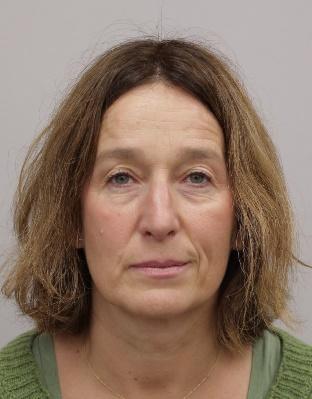
Judit DURST, PhD is a sociologist, social anthropologist, a Hon. Research Fellow at the University College London, UK, in the Department of Anthropology, and a senior researcher at the Centre for Social Sciences of the Hungarian Academy of Science. She has been a faculty member on CEU Summer University’s Romany Studies program for many years; and served on the Scientific Committee of the European Academic Network on Romany Studies.
Her research focus is on social inequalities, marginalisation, educational, social and geographical mobility, reproductive decision-making and economic anthropology. She has published several academic papers and book chapters. Her recent edited volume/special issue is on the cost of education-driven social mobility among racialized minorities.
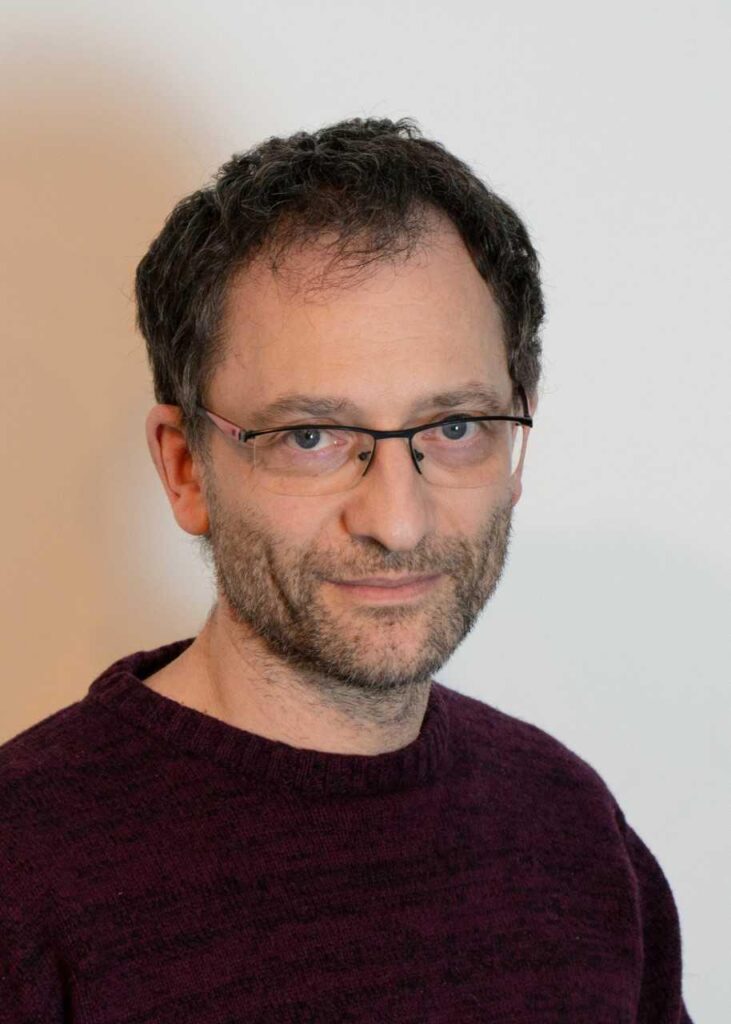
Gábor ERŐSS, PhD, is a Senior Researcher at the Institute for Sociology, Centre for Social Sciences, Eötvös Loránd University. He completed his studies at the University of Paris V – René Descartes, Eötvös Loránd University, and the University of Bielefeld. He earned his doctoral degree in 2003 at the École des Hautes Études en Sciences Sociales (EHESS) in Paris and at Eötvös Loránd University in Budapest.
His primary research area is public education. He also works in cultural sociology, the sociology of health, ethnic studies, and political sociology. The segregation and inclusion of Roma students have been central to his research for decades.
In parallel with his involvement in the EHEI project, he is engaged as a Senior Researcher in the School and Health project funded by the Hungarian Academy of Sciences, where he researches health knowledge, health behaviour, and health inequalities among school-aged children.
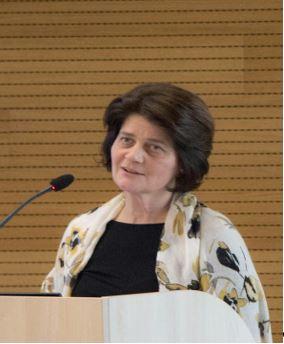
Prof Margit Feischmidt is senior researcher at ELTE Centre for Social Sciences, Hungarian Academy of Sciences Centre of Excellence and teaches as full professor at Institute for Communication and Media Studies, University of Pécs. She is a recurrent visiting professor at Central European University Nationalism Studies Program, and recently, she was guest researcher at DeZIM, Berlin,
She investigates civic forms of solidarity with migrants and refugees, published and edited book with Ludger Pries and Celine Cantat (Refugee Protection and Civil Society in Europe, Palgrave Macmillan, 2019) and several articles (The political aspects of solidarity mobilizations in the context of shrinking civil society during the first wave of COVID-19. European Societies 2022, Co-author: Eszter Neumann; ‘We Are That In-Between Nation’: Discourses of Deservingness of Hungarian Migrants Working in Institutions of Refugee Accommodation in Germany. Sociology. 2021 55 (2) 400-422. (Co-author Ildikó Zakariás)
Lilla JAKOBS

Lilla JAKOBS has been an International Funding Officer at the ELTE Centre for Social Sciences for the last three years. She earned her Bachelor of Arts at Southern Oregon University in the United States, and then spent 25 years working at Central European University in Budapest in various administrative and support roles. She was an active participant in refugee and humanitarian assistance programs in 2015-2016 in various border regions of the Balkans. As a direct link to this volunteer experience she became a founding member of OLIve, the Open Learning Initiative, which aims to foster educational trajectories, to create a safe and inclusive learning space for those who have experienced displacement, including asylum seekers and those with refugee status.
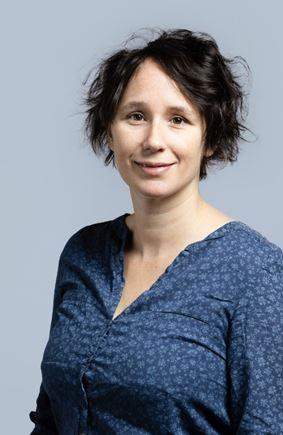
Eszter NEUMANN, PhD is the leader of the EHEI team at the Centre for Social Sciences. Her main contributions to the project involve the co-leading of WP1 and developing and experimenting with action methods (sociodrama in particular) as participative research tools. Eszter completed her PhD at King’s College London and she has been working at CSS since 2017. Her main research areas are policy sociology, conservativism, populism and education, as well as participative research methods. She is the link-convenor of the Sociologies of Education network of the European Education Research Association and the Editor-in-chief of Intersections East European Journal of Society of Politics.

Zsanna NYÍRŐ, PhD is a Research Fellow at the ELTE Centre for Social Sciences, Institute for Minority Studies. She holds a PhD in Sociology from Corvinus University of Budapest. Her research focuses on migration, social mobility, and inequality, with particular attention to first-generation graduates and Roma–non-Roma comparisons in Hungary. She primarily uses qualitative and mixed methods to examine lived experiences and the social costs of upward mobility. She is currently involved in a research project examining the elite access and career trajectories of first-generation graduates in Hungary.
Prof Attila PAPP is a sociologist – he was born in 1969, in Gheorgheni, Romania. He graduated from the Faculty of Sociology, University of Timisoara in 1996, incepted PhD at Eötvös Loránd University, Budapest in 2006. His main research areas are analysis of different forms of institutionalization of the Hungarian minority communities in Eastern Europe (e.g. education, dual citizenship); education of Roma in Central Europe, minority education in general, migration. He is editor in chief of REGIO journal, and at present, he is research professor and director of the Budapest-based Institute for Minority Studies, ELTE Centre for Social Sciences. He is also professor at Miskolc University, Institute for Applied Social Sciences.
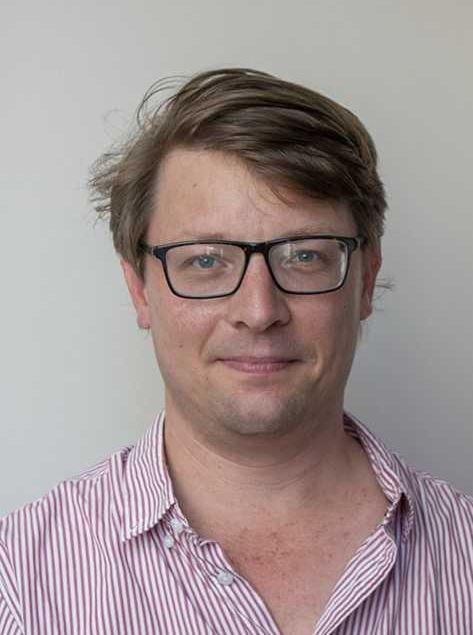
Gergely PULAY, PhD is a research fellow at the ELTE Centre for Social Sciences, Institute for Minority Studies, as well as a teacher in the Open Learning Initiative (OLIve) that provides adult education for displaced p people in Budapest. After gaining a PhD in Sociology and Social Anthropology from the Central European University, he was a postdoctoral researcher at the Max Planck Institute for Social Anthropology, Halle/Salle. His main research interests lie at the intersection of moral and economic anthropology, marginality, dependent relations and intellectual history.

Sára SZABÓ is a PhD student at the Doctoral School of Sociology at Eötvös Loránd University and a junior research fellow at the Institute for Political Science at the ELTE Centre for Social Sciences. Her doctoral research examines the interconnections between institutional care and local gender regimes through ethnographic fieldwork. In addition, she contributes to research projects on energy poverty, social mobility, and education. Her academic interests include care and social reproduction, gender relations, family policy, as well as qualitative and arts-based research methods.
Ildikó ZAKARIAS, PhD is senior research fellow at the Institute for Minority Studies, ELTE Centre for Social Sciences, Budapest, Hungary. Her main research areas are migration, civil society and humanitarianism, ethnicity and nationalism. Her most recent works appeared in the journals Sociology, Voluntas, International Journal of Sociology, Social Inclusion and Journal of International Migration and Integration. Her current research focuses on Central and Eastern European migrant teachers working in adult education for refugees, migrants and the unemployed in Austria.
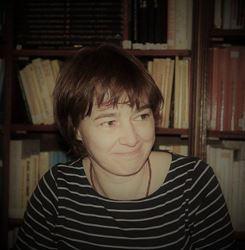
Csilla ZSIGMOND, PhD is a sociologist and research fellow at the Institute for Minority Studies, ELTE Centre for Social Sciences, and assistant professor at the Department of Sociology and Social Policy, University of Debrecen. She holds degrees in Sociology (Babeș-Bolyai University), Political Sciences MA (Corvinus University of Budapest), and a PhD in Sociology from ELTE Faculty of Social Sciences. Her research focuses on political sociology and identity construction, with recent work addressing migration and solidarity. Her publications focus on these thematic areas.